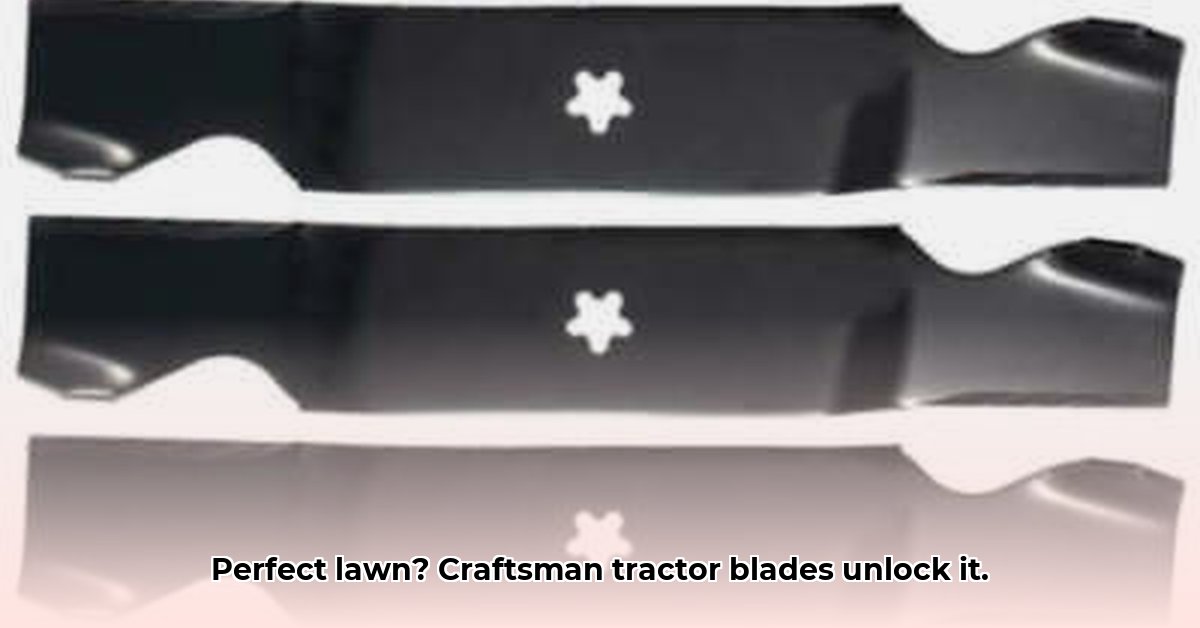
Choosing the right blades for your Craftsman tractor is crucial for a healthy lawn and a long-lasting mower. This comprehensive guide will walk you through selecting, installing, and maintaining your blades, ensuring perfect cuts every time. We'll explore different blade types, offer troubleshooting tips, and share insights gleaned from user reviews and expert advice. For information on other essential maintenance, check out our guide on Craftsman tractor oil filter.
Understanding Craftsman Tractor Blade Types
Craftsman offers several blade types, each designed for specific lawn care needs. Matching the right blade to your grass type and mowing preferences is key.
Mulching Blades: These finely chop grass clippings, returning them to the lawn as fertilizer. Ideal for a lush, healthy lawn, promoting natural fertilization and reducing the need for chemical fertilizers. A great eco-friendly option.
Bagging Blades: Efficiently collect grass clippings into a bag, perfect for a neat, tidy lawn and easy cleanup. A good choice for those who prefer a clean, collected finish.
High-Lift Blades: These blades excel at lifting grass clippings, ideal for taller grass and windy conditions. They also improve bagging efficiency. Great for tall, wet grasses where clumping can be a problem.
The best blade for you depends on your lawn's characteristics and personal preferences. Consider the trade-offs between convenient bagging and the environmental benefits of mulching.
Selecting the Perfect Craftsman Tractor Blades
Several factors influence blade selection. Choosing the right ones will save you time, effort, and potential damage to your equipment.
Deck Size: Always check your mower's deck size (usually printed on the housing). Using an incorrectly sized blade can cause damage to your mower. It’s essential to verify compatibility—check your owner's manual for precise specifications.
Grass Type: Thick, coarse grasses like tall fescue require more robust blades than delicate fine-bladed turf. This is crucial for efficient cutting and healthy lawn maintenance.
Blade Material: High-carbon steel blades generally offer superior durability and longevity, providing better value in the long run. Think of quality as an investment rather than an expense.
Terrain: Uneven terrain demands blades designed to withstand bumps and dips without damage. Consider the robustness of your blades in relation to your lawn's topography.
Here's a table to guide your selection:
| Grass Type | Terrain | Recommended Blade Type | Considerations |
|---|---|---|---|
| Tall Fescue | Level | High-Lift | Excellent for tall grass and even terrain. |
| Bermuda | Uneven | Mulching (robust design) | Handles tough grass and uneven ground well. |
| Zoysia | Level | Bagging | Ideal for neat, bagged clippings. |
| Fine-bladed Turf | Level | Mulching (fine-cut) | For a precise, manicured look. |
Installing and Maintaining Your Craftsman Tractor Blades
Safety is paramount when working with mower blades. Always disconnect the spark plug before starting any maintenance.
Step-by-Step Blade Replacement:
Secure the Tractor: Park on a level surface and engage the parking brake.
Remove Old Blades: Carefully loosen and remove the blade retaining bolts (refer to your owner's manual). Note the blade orientation for reinstallation.
Install New Blades: Align and attach the new blades, matching their original orientation.
Tighten Bolts: Securely tighten all bolts to the manufacturer's specified torque (found in your owner's manual).
Regular sharpening is crucial. A dull blade shreds grass, leading to uneven cuts and increased wear on your mower's engine. Sharpen your blades every 25 hours of use, or as needed.
Troubleshooting Common Issues
Addressing problems promptly prevents further damage and maintains your mower's efficiency.
Uneven Cuts: This often points to bent, dull, or improperly balanced blades. Inspect carefully and rebalance or sharpen as needed.
Vibrations: Excessive vibrations indicate loose blades or an imbalance. Double-check all bolts and ensure proper alignment.
Scalping: Adjust the cutting height if your mower is cutting too close to the ground.
Craftsman Tractor Blade Review Roundup: User Experiences
Online reviews reveal a range of user experiences. Many praise affordability, while others emphasize the importance of regular sharpening. Consider multiple sources and user feedback to inform your purchasing decision. Remember that personal experience factors significantly into reviews.
Key Takeaways: Choosing the Best Craftsman Blades
- Blade Type Matters: Mulching, bagging, and high-lift blades cater to different needs. Choose based on grass type and desired outcome.
- Proper Fit is Essential: Deck size and spindle hole configuration must match your Craftsman mower for optimal performance.
- Maintenance is Key: Regular sharpening and timely blade replacement greatly prolong your mower's lifespan and cutting efficiency.